Harris Technologies Sky Warden: the Return of the light attack

From agricultural and firefighting aircraft to a light military tactical air unit, the package developed by L3Harris Technologies for the Air Tractor AT-802U has given birth to the Sky Warden, a multirole aircraft capable of conducting close air support, surveillance, and reconnaissance missions in complex operational environments at relatively low cost In an era dominated by stealth fighters and unmanned systems, the U.S. and Israeli choice to employ a light attack aircraft like the Sky Warden—codenamed OA-1K Skyraider II—represents a return to operational pragmatism. Derived from the Air Tractor AT-802U,…

Read More

Tilt-Jet Revolution by Altovolo

tilt-jet altovolo

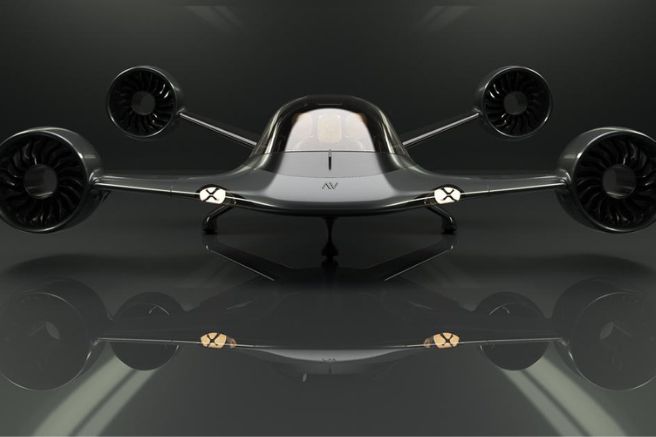
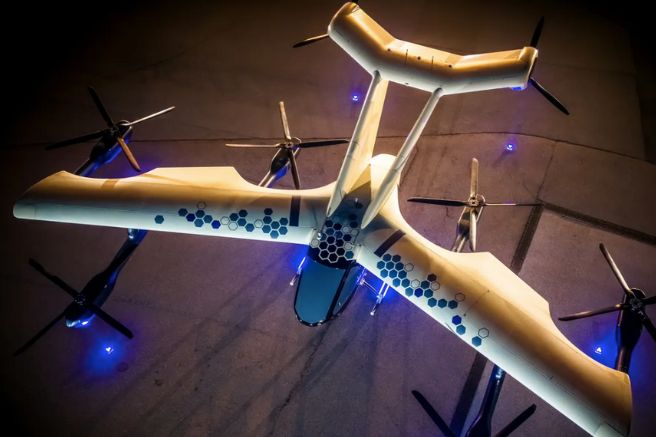
London-based company AltoVolo is breaking the mold of air mobility with “Sigma”. This is a hybrid eVTOL featuring a thermo-electric propulsion system designed for vertical take-off from private, compact spaces like driveways, rooftops, or yacht decks. While it may be presented as yet another “flying car,” it actually departs from that label and isn’t aimed at short urban connections. Instead, it sets out to redefine the concept of personal flight With a width of 4.8 meters, a total weight under one ton, and a compact, aerodynamic design that resembles a…

Read More

Airbus “A321 Xlr”, 11 hours non-stop

The Revolution in Civil Aviation Is called Airbus “A321XLR”. The revolution in civil aviation is called the “A321XLR,” with the final letters “XLR” standing for “Extra Long Range,” highlighting the operational frontiers reached by the new Airbus A321. These aircraft can cover long-range intercontinental routes thanks to a nearly 35% improvement in range compared to the A321Neo models and an 18% increase over the A321LR models from which they are derived. The A321XLR boasts a range of 4,700 nautical miles, or over 8,700 kilometers, enabling nonstop connections on intercontinental routes…

Read More

“S-A2” by Supernal, the electric aircraft of the future

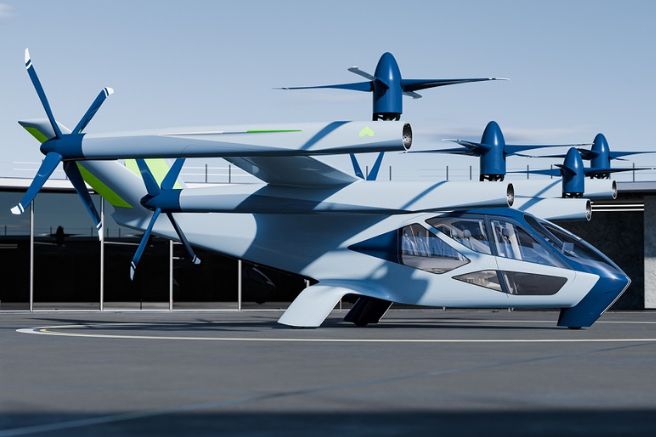
It’s called the “S-A2,” and for now, it’s just a concept—a concrete vision of what a future eVTOL aircraft might look like, designed to operate in urban areas as a new mobility solution. Developed by Supernal, part of Hyundai Motor Group, the aircraft can carry one pilot and four passengers, reaching a maximum speed of 190 km/h at an altitude of over 450 meters. This height is sufficient for urban operations worldwide, considering that currently, only 23 skyscrapers exceed 450 meters, and aside from Central Park Tower and One World…

Read More

With “Sky Magnetar” dreams are hypersonic

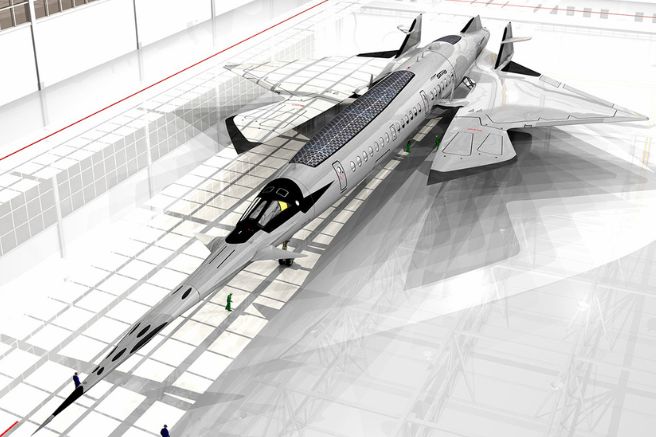
Everyone is talking about it, but no one understands how it works. Some discuss improbable jet engines powered by hydrogen fuel cells, and others talk about plasma jet engines, which are extremely difficult to realize. The fact remains that “Sky Magnetar,” a hypothetical aircraft intended to enable hypersonic flight in the civil aviation sector, designed by Spanish industrial designer Oscar Vinals, has sparked the imagination of all those who, since the retirement of the “Concorde,” have been dreaming of a new era of long-distance air travel at speeds multiple times…

Read More

Airbus “CityAirbus NextGen”, urban specialization

Under the influence of ecologically-driven initiatives aimed at improving the sustainability of urban mobility for both people and goods, the aeronautical sector is witnessing a diversification in air transport solutions and the development of a new generation of aircraft specialized in short-range travel. “Advanced Air Mobility” is the term coined for this new category of aircraft, although it’s somewhat misleading to define them as such, given their specialization in facilitating the movement of people and goods within large cities or areas with operational radii of just a few dozen kilometers.…

Read More

Interstellar “Cosmos”, innovation “Made in Japan”

Founded in 2005 by a diverse group of aerospace engineers, writers, and volunteers, Interstellar Technologies is a Japanese company established in 2019 and located on the island of Hokkaido. It was the first to launch a private carrier rocket capable of reaching space, a milestone achieved in 2021 and repeated twice thereafter. Now advancing further, the company focuses on developing new technologies to accelerate human activities in space, with a keen eye on environmental considerations. Among the most intriguing research areas is propulsion systems, with the “Cosmos” project standing out.…

Read More